In this guide
- Why Panama keeps coming up
- Three real routes to residence
- Every trip, in order
- Presence rules: the two-year line
- The EU tax list: what changed on 9 October 2026
- What the Panama card does and does not do
- A worked example (illustrative, not a client)
- Who Panama suits
- Who it does not suit
- How it fits a European base
- FAQ
- Sources
Status as of 10 October 2026: based on Decree-Law 3 of 2008 on migration, Executive Decree 416 of 2012 on the Friendly Nations category as amended in 2021 and by Executive Decree 16 of 31 August 2026, Executive Decree 17 of 8 September 2026 on Qualified Investors, the current requirement sheets of Panama's National Migration Service (SNM), and the EU Council conclusions of 9 October 2026 on the EU tax list. We will update this guide when the rules change.
This is episode 4 of our series on a second residence outside the European Union. In episode 1 we looked at Mexico, in episode 2 at Paraguay and in episode 3 at the UAE. Panama sits between those worlds: a small Catholic republic on the dollar, with one of the clearest residence menus in the Americas.
A person whose passport, bank account and right to live somewhere all depend on one state has given that state a great deal of power over their life. A second lawful residence spreads that power a little. It is an extra door, built calmly, while nothing is on fire.
Panama also carries a reputation, much of it from the 2016 leaks and years on the EU tax black list. That list changed this week; we explain exactly what changed and what did not.
Why Panama keeps coming up
A real permanent residence, quickly. Two of the three routes below lead straight to permanent residence; the third gets there after two years.
The US dollar. Panama has used the dollar since 1904 and prints no paper money of its own. A state that cannot print money has one fewer way to quietly tax your savings.
A territorial tax system. As a rule, Panama taxes income from Panamanian sources. Income earned abroad generally falls outside its income tax, even for a resident. We come back to the limits.
Faith and family in public life. The Constitution recognises that most Panamanians are Catholic while protecting freedom of worship for all. Pope Francis came to Panama City for World Youth Day in January 2019, and family and Sunday Mass still shape daily life.
The other side, stated plainly: everything runs through lawyers and paperwork, offices move at their own pace and the climate is hot and wet. Law and morality are not the same thing, here or anywhere: our job is to describe what the law requires so you can decide with open eyes.
Three real routes to residence
1. Friendly Nations: two years provisional, then permanent
The Friendly Nations category is open only to nationals of the countries listed in the decree: 51 since Ecuador was added on 1 September 2026. The list includes the Netherlands, the United Kingdom, Ireland, Germany, Austria, Switzerland, Belgium, France, Denmark, Sweden, Finland, Norway and Cyprus, among others. It does not include every EU state; Romania and Bulgaria, for example, are not on it. A passport alone is not enough: you also need one economic tie with Panama.
Employment: a job with a company established in Panama, with a work permit filed at the Ministry of Labour (MITRADEL). The residence itself is not a work permit.
Real estate: property in Panama worth at least USD 200,000, held in your own name, through a company you ultimately own, or through a private interest foundation you founded. A local bank may finance the purchase.
Fixed-term deposit: at least USD 200,000 for three years, free of liens, in a bank with a general licence operating in Panama.
The first permit is provisional for two years; you then file for permanent residence on the same tie, which must still be in place. Government fees on the SNM sheet are USD 250 plus USD 800; lawyers, notaries and translations come on top.
2. Qualified Investor: permanent residence directly
Executive Decree 17 of 8 September 2026, in force since 16 September, rewrote this programme. The main thresholds:
New property bought from the developer (first sale): at least USD 300,000, also possible through a qualifying off-plan purchase agreement;
Resale property: at least USD 500,000;
Securities on the Panamanian market: at least USD 500,000;
Fixed-term deposit: USD 500,000 at one of the two state banks, or USD 750,000 at a private bank with a general licence.
The money must be your own and come from abroad with a clear trail. The value that counts is the lower of the price paid and the documented market value, minus any mortgage balance. The investment is held for five years, with a yearly confirmation to the Ministry of Commerce (MICI). The decree sets up to 15 business days for the MICI certificate and 30 for the migration decision. The prize is permanent residence from the start.
3. Pensionado: for a lifetime pension
A foreign lifetime pension of at least USD 1,000 a month, or USD 750 a month if you also own Panamanian property worth more than USD 100,000, plus USD 250 a month for each dependant. It leads directly to permanent residence and comes with a set of discounts established by Panamanian law for retirees. It suits people who already have the pension.
Every trip, in order
At home, before you fly. Passport, criminal record certificate, birth and marriage certificates, all apostilled, and proof of the tie (title deed, bank letter or pension certificate). Documents are translated into Spanish in Panama by a certified translator. Investors also document the source of funds.
A Panamanian lawyer. Residence applications are filed through a lawyer holding your power of attorney.
Entry. Dutch, British and other European citizens generally enter Panama visa-free as tourists, typically for up to 90 days; check the current SNM list for your passport. The application is filed in Panama.
First trip, in the country. Sign the power of attorney, the health certificate, filing, photos and fingerprints, and a provisional card. Plan one to two weeks.
Second trip. Collect the permanent card or, for Friendly Nations, the two-year permit, which you later convert.
After that. Keep the tie in place, keep your entries and, as a Qualified Investor, report the investment each year.
Presence rules: the two-year line
Panama sets no minimum days a year for permanent residents, only an absence limit: Decree-Law 3 of 2008, article 31, allows a permanent residence to be cancelled when the holder has been away for more than two years, unless the absence was justified and authorised by the director of the Migration Service. In practice: at least one entry into Panama comfortably inside every two years. Keep the entry stamps or the official movement certificate.
During the Friendly Nations provisional stage there is no rule of uninterrupted stay, but the permit and the tie must be kept alive for the full two years.
The EU tax list: what changed on 9 October 2026
From February 2020 until this week, Panama sat on Annex I of the EU list of non-cooperative jurisdictions for tax purposes, the so-called black list. On 9 October 2026 EU finance ministers removed it from Annex I and moved it to Annex II, the list of cooperative jurisdictions that still have open commitments. Two things made the difference: Law 526 of 2026, which adds economic substance rules for companies in multinational groups that receive foreign passive income, and a new in-depth review by the OECD Global Forum of how Panama exchanges tax information on request. Panama stays on Annex II while that review is pending, and its outcome decides the next step; the next update of the EU list is due in February 2027. The revised list takes formal effect on its publication in the EU Official Journal.
What it means for you:
The list never governed residence. Your card, its renewal and your right to live in Panama do not depend on it.
It governs companies, payments and banks. Several EU states attached defensive tax measures to the black list, and each follows the change on its own timetable.
Our view, while Panama is on the watch list: use Panama for what it does well, a lawful residence and perhaps a home. Do not build a European business or payment structure on a Panamanian company or foundation until the review is closed and your advisers have checked your country's rules. Our piece on international company structures explains why coherence beats cleverness.
What the Panama card does and does not do
It is a real, state-issued right to live in Panama, and for permanent residents a card with no periodic renewal.
It does not decide your tax residence. Panama treats you as tax resident after more than 183 days in a tax year, or if your permanent home or centre of vital interests is there. Your current country applies its own tests regardless. A Dutch reader who keeps a home and family in the Netherlands stays resident there under the Dutch all-circumstances test; the Netherlands and Panama have a tax treaty in force since 2011. A British reader is judged by the UK Statutory Residence Test; the UK and Panama have a treaty in force since 2013. There is no Cyprus-Panama treaty. Declare your real tax residence on every bank and CRS form.
The territorial rule has limits. Panamanian income of individuals is taxed at progressive rates, with the first USD 11,000 a year exempt, then 15%, and 25% above USD 50,000. Foreign income stays outside Panama's income tax as a rule, but from 2027 Law 526 asks companies in multinational groups to show real substance in Panama for that treatment on passive income. None of this changes what your home country taxes.
Banks are their own gatekeepers. Panamanian banks ask hard questions and open accounts slowly; like European banks, they increasingly act as an arm of the state's compliance machine. Our guide to offshore banking in practice shows a clean file.
It is a path to a passport, with a condition. Under article 10 of the Constitution, a foreigner with five consecutive years of residence can apply for naturalisation, must show Spanish and basic knowledge of Panama, and must expressly renounce the previous nationality. What that declaration means for your current citizenship depends on your home country's law.
Nobody but the Panamanian authorities can approve it. No adviser can promise the outcome.
A worked example (illustrative, not a client)
Pieter and Anouk, both 53, are Dutch and have lived in Limassol with their two teenagers for three years. Pieter runs a design consultancy from Cyprus, where the family is tax resident and he is registered as Non-Dom. They want a second residence in the Americas that does not depend on the EU.
Friendly Nations, property tie: as Dutch nationals they qualify. They buy a USD 220,000 apartment in Panama City, apply for the two-year provisional permit for the family and file for permanent residence after two years.
Qualified Investor instead: a USD 300,000 new apartment would give permanent residence at once, with a five-year holding duty and yearly reports. They pay more to skip the two-year wait.
What stays the same: Cyprus remains their home, their tax residence and the place where the consultancy is managed. They visit Panama once or twice a year, stay well below 183 days and declare any rent in Cyprus. No Panamanian company is needed.
Who Panama suits
Nationals of the listed countries who would happily own a USD 200,000 property or deposit anyway;
investors who want permanent residence from day one and can hold an asset for five years;
retirees with a lifetime pension of USD 1,000 a month or more;
families who value a Catholic culture, Spanish for the children and the dollar;
people with business in the Americas.
Who it does not suit
Anyone whose only passport is not on the Friendly Nations list and whose budget stops below USD 300,000. The cheapest route is closed to them.
Anyone who wants a Panamanian company to run European business. The EU watch status and your home country's rules make that a poor fit for now.
Anyone hoping the card ends tax residence at home. It does not.
Anyone who wants to do it alone. Every file goes through a local lawyer, in Spanish.
Anyone who cannot plan an entry every two years.
How it fits a European base
For most of our readers the main base stays in Europe. If that base is Cyprus, the order there does not change: housing, company, Yellow Slip, TIC (tax number), GESY, bank and, last, Non-Dom. Our guide to relocating to Cyprus walks through it. As a second residence, Panama sits between the quiet reserve of Paraguay and the busy hub of the UAE: a permanent card that asks for little presence and a door into the Americas. All English articles are in the blog.
FAQ
Does the EU tax list affect Panama residence?
No. The list concerns how EU states treat Panamanian companies and payments. On 9 October 2026 Panama moved from the black list (Annex I) to the watch list (Annex II), pending an OECD review.
How much do I need to invest for Panama residence?
For Friendly Nations, USD 200,000 in property or a three-year deposit, or a local job instead. For Qualified Investor, from USD 300,000 for a new property bought from the developer, USD 500,000 for resale property or securities, and more for bank deposits.
Do I have to live in Panama?
No minimum number of days. A permanent residence can be cancelled after more than two years of absence without authorisation, so plan at least one entry inside every two years.
Does Panama residence make me tax resident there?
Not by itself. Panama looks at more than 183 days in a tax year or a permanent home there. Your current country applies its own rules.
Can I become a Panamanian citizen?
After five consecutive years of residence you can apply for naturalisation, with Spanish, a knowledge test and an express renunciation of your previous nationality.
Sources
Decree-Law 3 of 22 February 2008 on the National Migration Service (art. 31 on cancellation): https://panama.justia.com/federales/decretos-leyes/3-de-2008-feb-26-2008/gdoc/
SNM, residence permits by category: https://www.migracion.gob.pa/permisos-migratorios/
SNM, requirement sheet for nationals of specific countries (Friendly Nations, April 2026): https://www.migracion.gob.pa/wp-content/uploads/2026/04/LE2.pdf
SNM, requirement sheet for retirees and pensioners (April 2026): https://www.migracion.gob.pa/wp-content/uploads/2026/04/PE2.pdf
MICI, new Qualified Investor decree (28 Sep 2026): https://mici.gob.pa/2026/09/28/panama-apuesta-por-mas-inversion-y-empleo-con-nuevo-decreto-de-inversionista-calificado/
MICI, Qualified Investor programme: https://mici.gob.pa/inversionista-calificado/
Council of the EU, update of the EU list of non-cooperative jurisdictions (9 Oct 2026): https://www.consilium.europa.eu/en/press/press-releases/2026/10/09/taxation-council-updates-the-eu-list-of-non-cooperative-jurisdictions-for-tax-purposes/
European Commission, Annex I and Annex II after the October 2026 update: https://taxation-customs.ec.europa.eu/news/council-updates-eu-list-non-cooperative-tax-jurisdictions-cooperation-delivers-further-progress-2026-10-09_en
Law 526 of 2026 on economic substance for foreign passive income (Official Gazette 30534-B): https://www.organojudicial.gob.pa/uploads/blogs.dir/2/2026/05/462/ley-526-de-28-de-mayo-de-2026.pdf
Panama Revenue Directorate (DGI), tax treaties in force: https://dgi.mef.gob.pa/Internacional/LConvenios
Constitution of Panama (arts. 10 and 35): https://constitucion.te.gob.pa/constitucion-vigente/
If you would like a second pair of eyes on how a Plan B residence fits your situation, you can write to us.
General information, not tax, legal or immigration advice. Panamanian authorities decide every application.
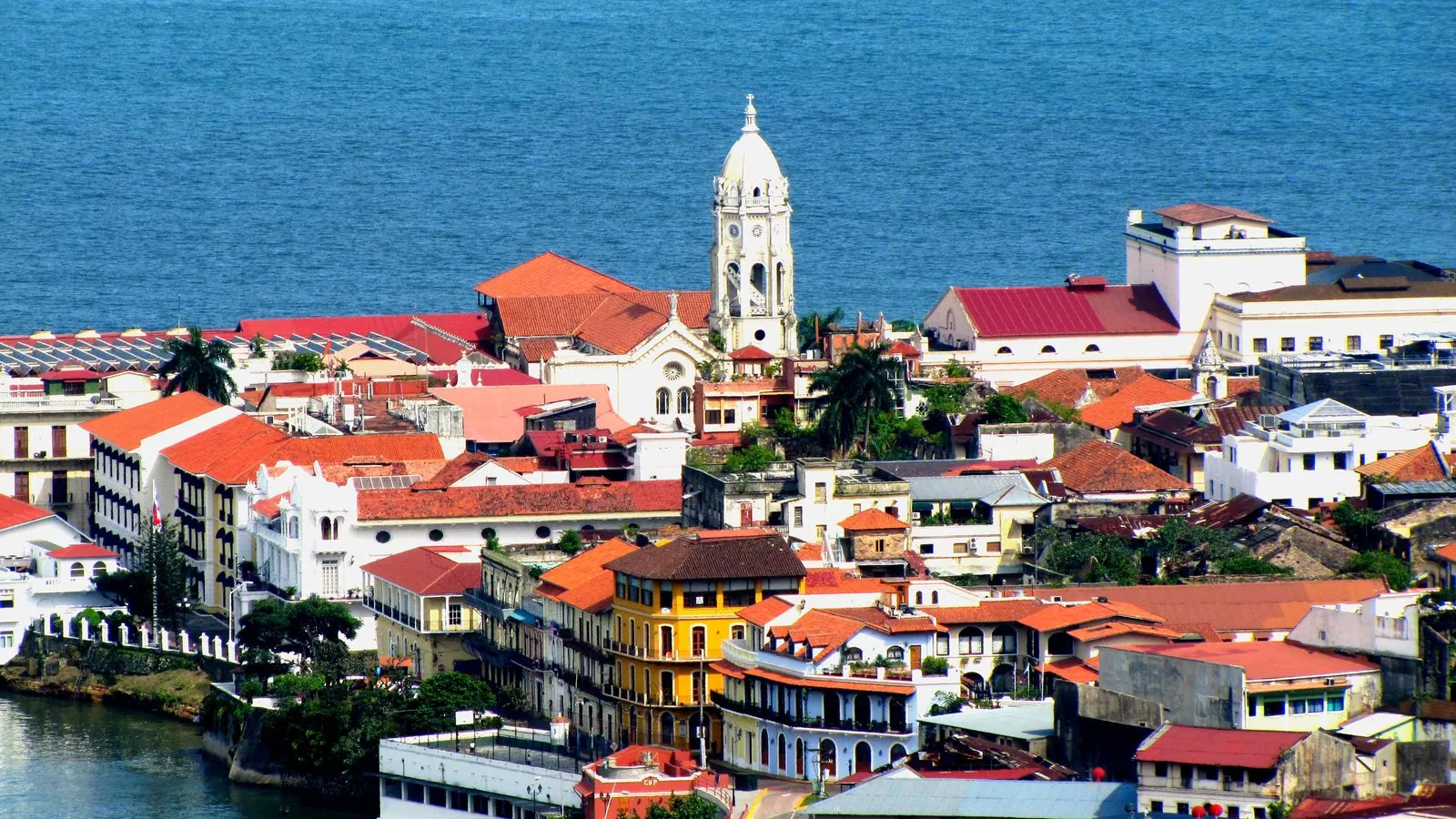
Cover photo: Tamara Aguilar, Wikimedia Commons, CC BY 2.0, cropped.